Moisture is one of the leading causes of flooring failures. Excess moisture vapor can lead to blistering, peeling, and loss of adhesion, compromising the performance of the coating system. Our moisture mitigation solutions help protect your floor and ensure long-term durability.
Moisture Vapor Control
SOLUTIONS
WHY CONCRETE MOISTURE MATTERS
COMMON SIGNS OF MOISTURE-RELATED FLOORING FAILURE
Concrete is naturally porous. Moisture from the ground, residual water within the slab, or changing environmental conditions can move upward through the concrete.
When a coating is installed without addressing elevated moisture, vapor pressure can become trapped beneath the floor and cause premature failure.
Blistering or
bubbling
Peeling or delamination
Elevated alkalinity at the surface
Soft or weakend coatings

WHAT IS A MOISTURE VAPOR BARRIER?
A moisture vapor barrier (MVB) is a specialized epoxy coating installed directly over properly prepared concrete to reduce moisture vapor transmission from the slab.
By limiting moisture and alkalinity from reaching the finished flooring system, an MVB helps create a stronger bond and reduces the risk of moisture-related coating failure.
The MVB serves as the foundation of the resinous flooring system, providing a stable base for epoxy, flake, quartz, metallic, urethane cement, and polyaspartic flooring systems.
MOISTURE VAPOR BARRIER CHARACTERISTICS
EXTENDS FLOOR LIFE
Moisture-related failures are one of the most common reasons resinous floors fail. An MVB can dramatically increase service life by preventing bond loss, premature repairs, costly replacements
and unexpected downtime
PREVENTS DELAMINATION
Concrete is porous. Water vapor naturally moves from the ground through the slab. If that moisture pressure becomes too high, it can literally push the epoxy off the floor. An MVB blocks that vapor before it reaches the decorative flooring system.
CREATES A STABLE FOUNDATION
Moisture vapor barriers create an extremely strong bond to properly prepared concrete and provide an ideal surface for additional epoxy coats.
SYSTEM DESIGN
Moisture Vapor Barrier System

Installation Process
01
Concrete Preparation
We begin by shot blasting the concrete to a CSP 3/4 profile, creating the ideal surface for maximum epoxy adhesion and long-term durability.
02
Moisture Vapor Barrier
A moisture vapor barrier is applied to reduce moisture transmission through the concrete, helping prevent delamination and other moisture-related issues.
03
100% Solids Epoxy
A layer of 100% solids epoxy is applied to provide a durable foundation with excellent strength and protection.
04
Broadcast - Flakes/Sand
While the epoxy is still wet, decorative flakes or aggregate sand are broadcast into the surface to add texture, strength, and visual appeal.
05
100% Solids Polyaspartic
Once cured, the first layer of polyaspartic is applied to provide UV stability, chemical resistance, and durability.
06
100% Solids Polyaspartic
A top coat of polyaspartic is applied to seal the system and create a durable, easy-to-maintain finish.
MVB Case Study
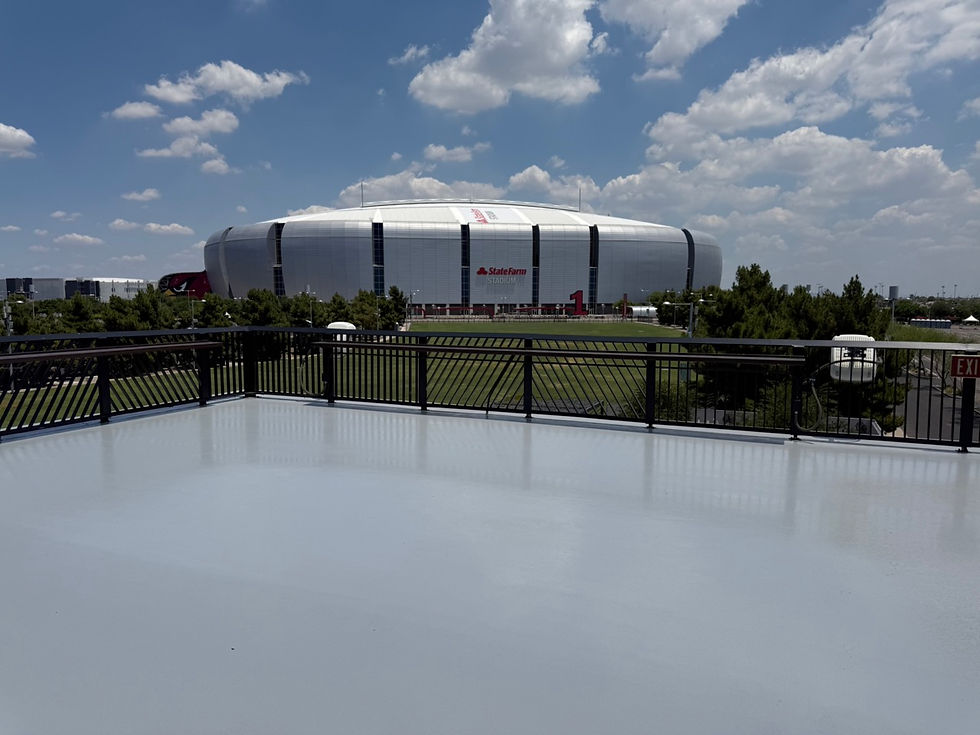
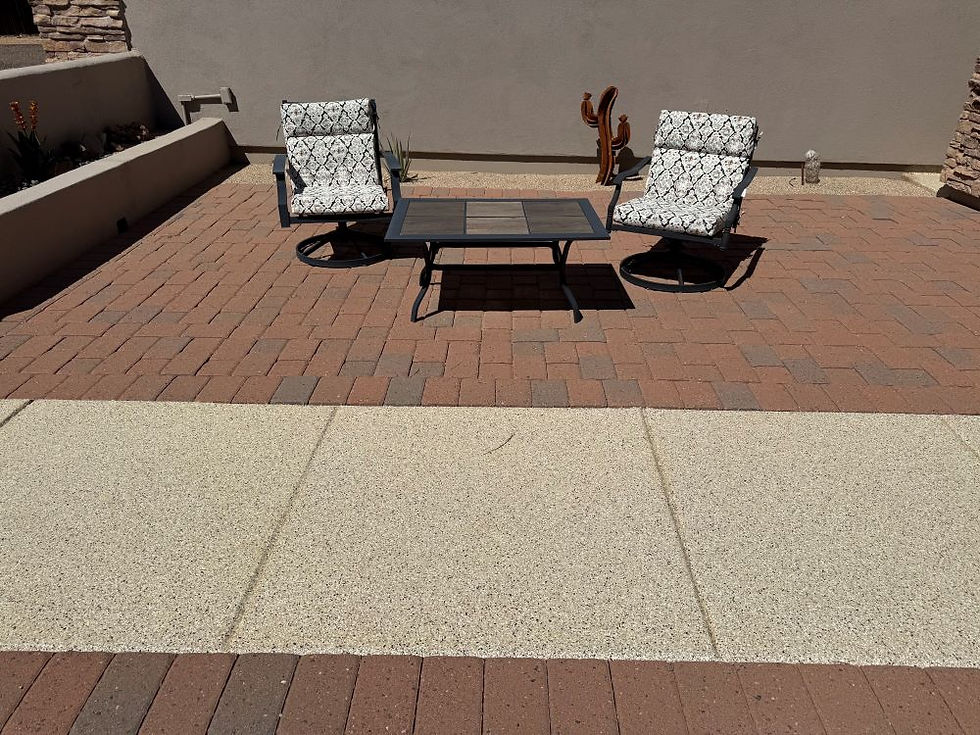
Real-world moisture vapor barrier systems engineered for strength and water resistance.